
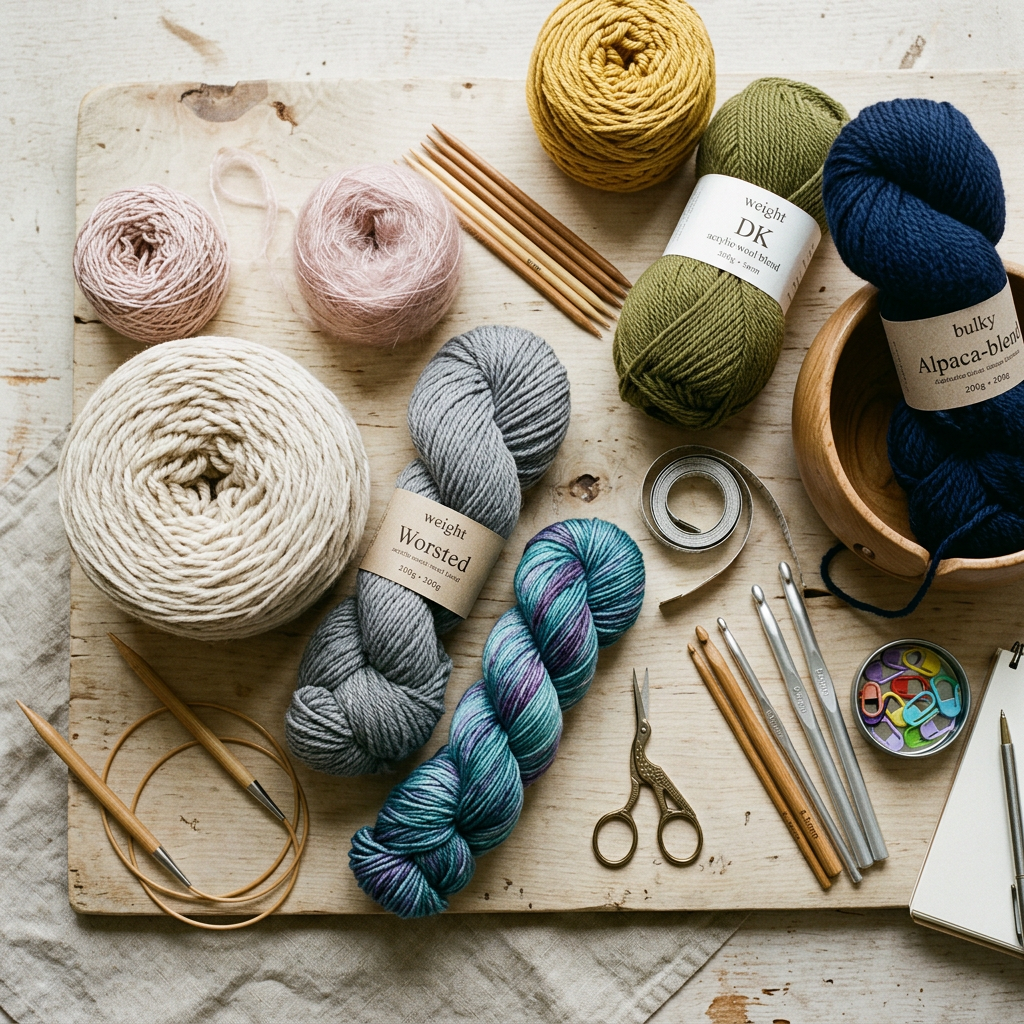
Yarn Substitution: How to Swap Yarns Without Losing the Flow
There are numerous reasons you may find a pattern but be unable to acquire the called-for yarn. The most common reasons are that the yarn has been discontinued, you do not like it, or it’s expensive. You may find yourself with doubts about whether the project will turn out the right size, whether the stitches will look as they should, or whether the item drapes right. Substituting yarn is not a risk; it’s an acquired skill. Here, we will help you understand the important factors involved with substituting a yarn that lets you get the correct results.
Start Strong: Yarn Weight, Gauge, and Yardage Are the Core Trio

In yarn terms, yarn weight refers to the strand thickness. It has nothing to do with how heavy or light it feels in your hand. Two yarns may have the same weight, but how they’re spun and the fibers used can vary. Labels are a good starting point, but there is more beyond them. One example is comparing wool yarn and cotton. A worsted-weight wool yarn is light and airy, while cotton is heavier and firmer. It is also worth noting that labels will vary internationally. For instance, 8-ply yarn in one country is equivalent to DK yarn in US terminology. If your yarn does not have a label, you can measure it in the number of wraps per inch (WPI) to determine its closest weight.
When you measure the gauge of a project, it needs to match the pattern’s gauge to achieve the correct size. Yarns that have the same weight can have different stitch counts, so the rule of thumb is: always make a gauge swatch to ensure the right size. In addition, once your gauge swatch is created, washing it following care instructions will give you an idea of how the yarn behaves. Sometimes you will need to adjust your hook size to achieve the desired result.
To determine how much yarn is needed for a given design, you need to determine the yardage required. The weight of the yarns can differ in the amount of yardage when they have different densities. Skein counts can be misleading. Yardage—total length of yarn—is what actually determines coverage. Some yarns pack fewer yards per ounce due to fiber density. A lighter yarn requires fewer yards per inch and is a smaller skein than a heavier one. You may have to recalculate if you substitute yarns; using a yarn substitute calculator can be extremely helpful.
Fiber Matters: How Yarn Personality Shapes the Fabric

The fiber content of your yarn is related to the drape, texture, and longevity. Wool fiber yarns are commonly used in colder weather, while light cotton is used in warmer weather due to its wicking properties. Synthetic yarns like acrylic are often used for blankets that endure frequent washings and retain color. Understanding a yarn fiber’s qualities, such as durability, colorfastness, and stretch, among others. The purpose of your project will dictate the best yarns to use.
Drape pertains to how a completed design flows. Some projects, like garments, require a fluid drape that moves well with your body. Others require more structure and stability, like dishcloths. Drape dictates how your projects behave, so you need to consider how soft, how flexible, the temperature, and the strength of various yarns before making your decision.
Another point you must consider prior to choosing a substitute yarn is the care instructions. When you plan a project, you need to realize that some garments are harder to maintain than others. When stitching up a baby blanket, consider how often it will need to be washed and choose something machine washable. Just think about what your recipients’ laundry habits are, so you don’t discourage them from enjoying their gift.
Texture, Ply, and Stitch Definition: Keep the Visual Flow Intact

How yarn is put together determines how clearly defined your stitches will show up. For the clearest stitch definition, using a multi-ply yarn is best. Single-ply yarns can be used when you desire a softer definition yarn that results in a better drape; however, they may pill more than denser yarns. When you choose a suitable density and ply, it will result in your desired look.
The texture of the yarn also affects how well detailed stitches stand out. When you’re using a textured yarn such as boucle or chenille, it’s better to use the simpler, basic stitches because complex stitches are lost in the texture. Smoother yarn will define more intricate stitches like lace or cables.
By understanding the elements of different yarns, substituting them will be almost effortless. To make it less daunting, you can use current tools like yarn comparison databases that provide information on fiber content, gauge, weight, and texture to evaluate and compare yarns.
Modern tools make yarn substitution far less intimidating. Yarn comparison databases allow you to evaluate fiber, weight, gauge, and texture in tandem. These tools are especially useful when the recommended yarn for a pattern has been discontinued or when you shop online and cannot feel the fibers in person. Using these tools can help you learn faster and boost your confidence when it comes to yarn choices.
Confident Yarn Swaps Create Better Makers
When you can’t get the yarn you need, you have the power to adapt your patterns to suit your budget, creativity, and personal needs. Understanding the nature of the yarns available to you gives you the opportunity to adjust the outcome instead of using unpredictable guesswork. You can build confidence to make a pattern more flexible and, with practice, take on less risk and feel more empowered.


Leave a Reply