
Build Your Own Crochet Pattern Library: Simple Steps for Efficient Creativity
For many crocheters, a crochet pattern collection is inevitable and necessary. Building a crochet pattern library early on should be a top priority if you plan on revisiting a design, creating a project calendar, or finding inspiration for original designs. Pattern libraries help keep crafters well organized and efficient while fostering creative freedom. Crocheters of all levels can benefit from having all their patterns easily accessible. You will be able to get started or improve your crochet pattern library by reviewing this step-by-step guide.
Why Create a Crochet Pattern Library?
Have you ever gifted a friend or family member one of your crochet designs, and it gets so many compliments that at least one of their friends asks how to get one? A pattern library will save you hours trying to locate that project’s instructions to pass it on or make another for them. When you start to get an idea for a new design, you can browse a library that is filtered by themes, yarn types, or difficulty levels, so the creative process flows smoothly from inspiring designs. If you keep a crochet journal, you can add the notes for modifications to your pattern library for future use.
Steps to Build Your Library
Creating your library system is as simple as deciding on a format based on your organizational tendencies, categorizing the content, and documenting notes on specifics, such as substitute yarns or stitch techniques, along with photos.
Step 1: Choosing the Right Format
Choosing the format that works for you will help you construct your pattern library with an organizational structure that makes accessing patterns for your crochet endeavors easier. Three of the most popular formats are digital, physical, or a hybrid of both.
Digital Libraries
With a digital method, you can store your patterns organized in a way that makes sense to you. PDF patterns can be stored in the cloud on various platforms for reading on your tablet or laptop or for printing later. You can also store links to designers’ sites for specific patterns you plan to revisit in a spreadsheet like Excel or Sheets. YouTube is a popular site for video tutorials, and you can subscribe to channels or create playlist categories to save individual tutorials for later.
Physical Libraries
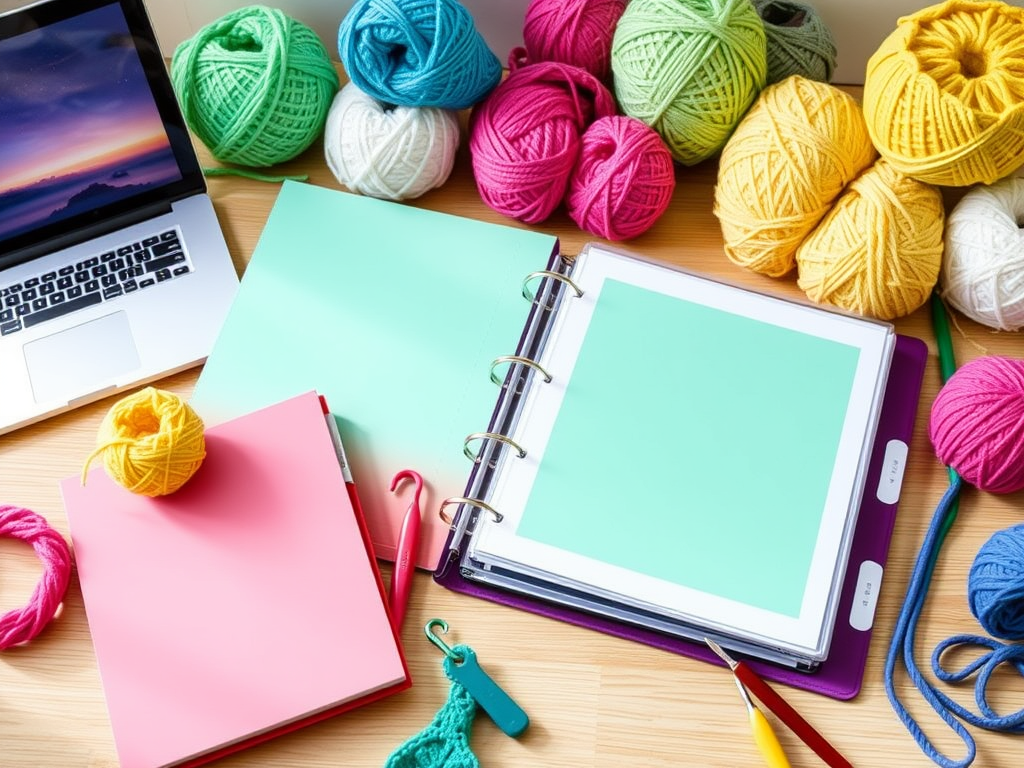
Many people like to have physical prints of their patterns readily available. One of the most popular physical crochet library systems is a tried-and-true three-ring binder with dividers that allow flipping to the desired sections. An alternative to this is to have a filing cabinet or box with file folders and tabs to organize your projects. For instance, having a tab for slouchy beanies and one for bucket hats.
Hybrid Libraries
Hybrid libraries offer the best of both worlds; you can print all of your patterns and resource links and store them in a binder or filing box. If you do not have access to digital materials or simply prefer to crochet without them, you will have a physical library. If one of those documents is damaged or destroyed, you can reprint it and refile it. Having both types of libraries combined ensures you have backups of your documents.
If your system is organized enough, finding your patterns will be effortless. Most people will start by categorizing by type of projects, like hats, amigurumi, or throws. There may be seasonal or holiday sections. By using color-coded tabs, you can drill down further into yarn weights or difficulty level.
Step 2: Editing and Customizing
Personal touches make a library as unique as the maker. Adding notes for alternate yarns, different techniques for special stitches, and photos of your completed works will all help jog your memory when you decide to create another item from the pattern. If you’ve substituted a yarn other than suggested by the pattern, make note of the brand, weight, and colors. You can jot down other yarns or colors you’d like to try in the future. If you modified a pattern to better suit your style, you will want to record it in your notes. Photos of your projects will let you see how successful they were or where they could be improved.
Step 3: Maintaining and Expanding Your Library
As your tastes and skill develops, so should your library. A regular review and update should be done to purge old patterns that are not likely to be used or shared. New patterns should be added to inspire new ideas and to have fun with fresh designs. You may want to include items that are trending if you sell at craft fairs or online, plus it’s good for following trends over the years. And another way to update your catalogue is through sharing and collaboration with friends, both online and locally.
A Place for Everything is a Place for Synchronicity
A custom crochet pattern library goes beyond the realm of simply organizing. A library is also a valuable resource that sparks your creativity in the most supportive manner. Much like a garden, you start off small with seeds, keeping your rows of categories, and constantly feeding it as it grows into a priceless treasure trove of ideas and inspiration. If this sounds appealing, start gathering your favorite patterns and start getting them in order today!


Leave a Reply