
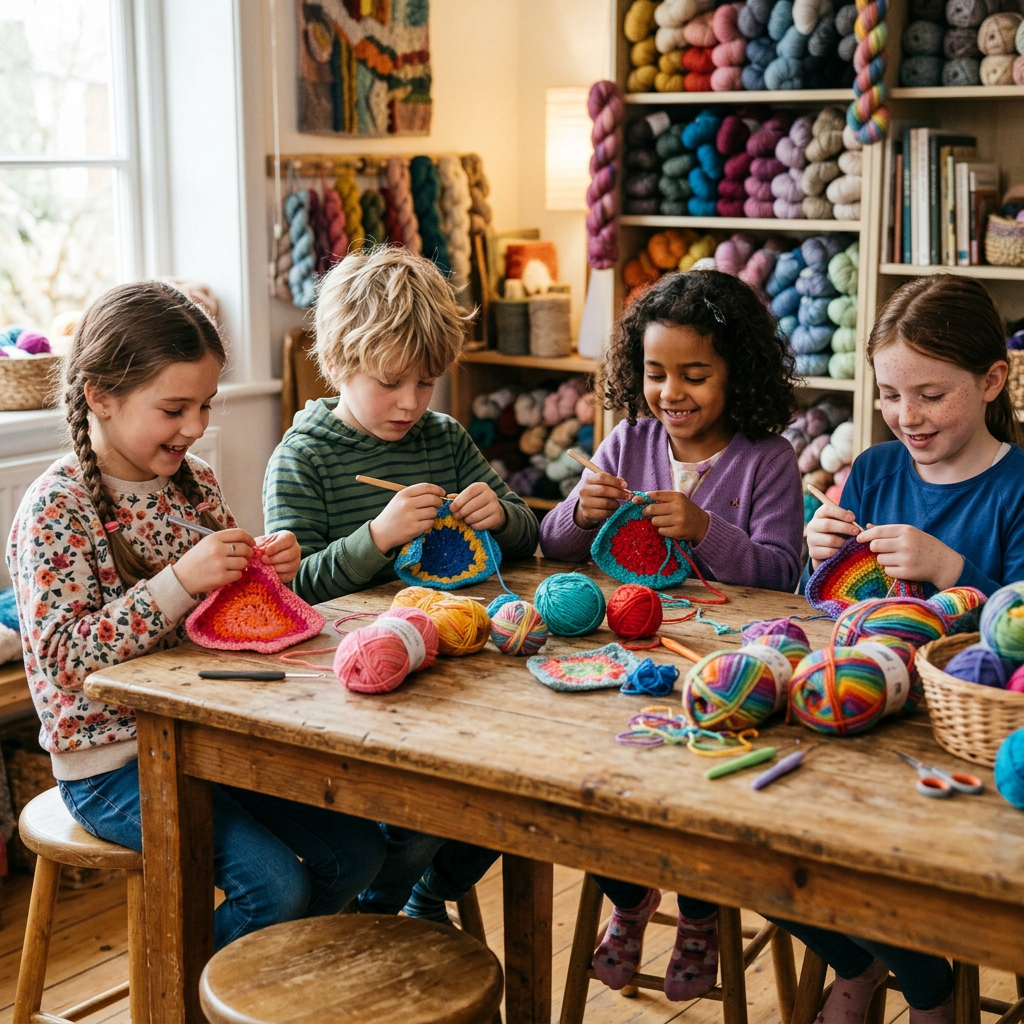
Crocheting with Kids: Turning Yarn Time into Family Fun
Crochet is often thought of as a tradition passed down through generations of yarn artists. Not only can it provide families with nostalgia, but it can also help family members build confidence. In addition, crochet encourages creativity and calm. Teaching crochet to your kids and their friends mixes discovery with delight. With the right tools, materials, projects, and patience, crochet will become a frequent and cherished pastime. This article offers suggestions to guide your kids toward a successful and fun learning experience.
Set Kids Up for Success with Simple Supplies and Expectations

One of the things that will make the biggest difference in the pleasure of learning to crochet for kids is selecting appropriate, safe tools. A larger hook will give smaller hands more control over tension and stitches. Using solid colors in bright tones makes it easier to see the stitch definition and where mistakes have occurred. A size H or I hook is often paired with a medium-weight acrylic or cotton for the greatest success.
One key aspect of a thriving child is the ability to see a project through from start to finish. Choosing simple projects that can be completed in a short period of time will stave off frustration and allow your kid to get faster results to build confidence and stay excited about crochet. For instance, a headband or friendship bracelet can be completed in one session, and they are functional items.
When kids are more invested in the creative process through their own choices, they are prone to remaining engaged in activities. Crochet offers a wide range of choices in colors, yarn textures, and patterns. These options provide kids with a sense of ownership over their projects. This freedom of creativity makes the learning process less of a chore and more like play.
Easy Crochet Patterns Kids Love to Make

One type of crochet project that appeals to kids is beginner accessories. The attraction of making accessories is that they are functional and fun, and also express individuality to keep or give to others. Some good examples of great, easy projects are friendship bracelets, headbands, scrunchies, and bookmarks. These items can be made with the simplest stitches and help kids master their skills.
Creative, attention-grabbing projects such as amigurumi ignite the imagination. These simple crochet animals, foods, and shapes make for a magical toy. The skill-building benefit derived from amigurumi is in opportunities to work in the round and practice increasing and decreasing stitches. When completed, extra satisfaction and motivation come from being able to play with the designs or turn them into a keychain to hook onto backpacks. Using a bulkier yarn makes these projects work up quickly, makes creating stitches easier, and makes errors less obvious.
By creating crochet pieces for use around the home, kids can develop a sense of accomplishment, take ownership of their creations, and learn valuable lessons from the craft. For instance, the flat nature of coasters is an opportunity to learn how to block and shape items. While creating little baskets and small pouches is a practice in structure. Another lesson to be learned is to create granny squares and assemble them into a blanket. This project allows your child to start small and watch it become something bigger. Another great takeaway from projects of this kind is that kids get to make some of the home decor decisions.
Making Crochet Time Safe, Happy, and Stress‑Free

When working with younger children, a few simple steps can help ensure their safety as they learn to crochet. Do not use any sharp tools that could cause cuts and scrapes. Instead, seek out blunt safety scissors and tapestry needles. These items are available in plastic instead of metal. Use safety eyes when making amigurumi items, or simply embroider them on, to further learn new skills.
Crochet is an opportunity for your children to learn patience through mistakes and further develop their problem-solving skills. By having your kid unravel stitches to the point where a correction needs to be made, instead of simply starting over, there are lessons of frustration. There should be a focus on celebrating effort over achieving perfection. And working with your kids close by and not hovering over every step they make will help them feel supported rather than over-evaluated. These practices provide a safe environment that shows that when you make mistakes, you are not a failure.
One of the perks of crochet is that it can be a shared activity that allows kids to bond over a common pastime and feel included and encouraged. Group crochet opens a child to teamwork experiences and opens dialogues. Kids can show off their projects and learn valuable techniques from each other. When adults and kids crochet with one another, confidence builds, and learning crochet feels more like a collaboration than a lesson
Creating Memories One Stitch at a Time
Crocheting with kids should be focused on laughter, learning, and connecting with others. Choosing to work with simple patterns that are fun and using safe supplies can bring crochet up to a joyful experience. Giving a child the opportunity to nurture their creativity and boost confidence in an atmosphere where perfection is not required makes every project completed a fond memory developed with patience. When the right approach is taken, the time you spend crocheting with your children expands to a shared language of creativity.


Leave a Reply